|
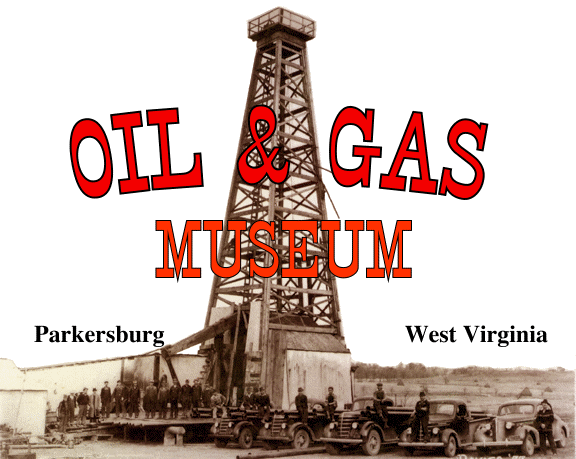
oilandgasmuseum.com covering the history of the oil and gas industry in West Virginia and Ohio |
|
A thriving commercial oil industry was in process as early as 1819 with the first major wells drilled at Petroleum, West Virginia, outside Parkersburg, early in 1859; California, West Virginia in the summer of 1859; and Burning Springs, West Virginia a year later in 1860. Natural gas was moved in wooden pipes from wells to be used as a manufacturing heat source by the Kanawha salt manufacturers as early as 1831. These events truly mark the beginnings of the oil and gas industry in the United States. With oil selling for $30.00 a barrel in 1860 and natural gushers being drilled at only 100 feet, the West Virginia oil field quickly made local millionaires. The wealth of the first oil barons was used politically in bringing about statehood for West Virginia during the Civil War. Many of the founders and early politicians were oil men - governor, senator and congressman - who had made their fortunes at Burning Springs in 1860-1861. On May 9, 1863 the important Burning Springs oil field was destroyed by Confederate raiders lead by General Jones, making it the first of many oil fields destroyed in war. After the Civil War, the industry was revived and over the next fifty years the booms spread over almost all the counties of the state. Drilling and producing of both oil and natural gas continues throughout the state to this day. This exciting history is portrayed at the Oil & Gas Museum, and documented in a recently published book Where It All Began by David McKain and Bernard L. Allen, Ph.D.
|
|
|||||